
What it (really) means to build community in healthcare

Recently, a leader of a healthcare organization reached out to us about joining Sosido. She said:
“Our members have expressed that the member benefit they appreciate most is the sense of community. I'm starting to look at how we can build that community.”
It got me thinking about what creates a sense of community in the first place.
The community itself is already there—in the people who belong to your organization, the work they’re doing, the knowledge they share and the professional identity that connects them.
The challenge is helping people feel that community: I know these people. They know me. I’m part of something with them.
You don’t have to manufacture that connection. You have to notice it, make it visible, and give it somewhere to grow.
Community isn’t something you create. It’s something you support.
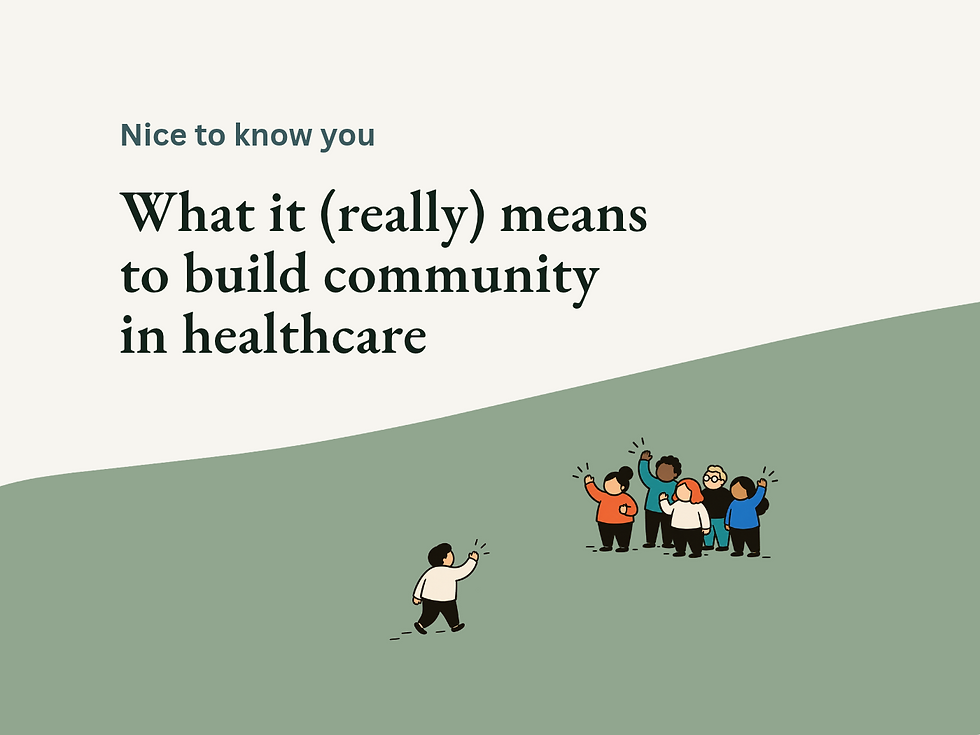
So, how do you do that?
Be a good host
Think about what a good host does at a party. They don't just get everyone into the same room and hope for the best. They help people notice one another.
"Have you met Dr. Khan? His PhD work was in your specialty area."
"Eileen is working on revising her centre's home chemo guidelines. Didn't you just do that at your centre too?"
Your members already have things in common—that's probably why they're part of your organization. But they don't necessarily know who else is working on the same problems, publishing in their area or sharing their professional interests.
Help them find out.
Show them what their colleagues are doing. Unearth the common ground. Make names familiar. Give people a reason to say, when they meet at a conference:
“Oh yes—I know who you are.”
Recognize the work
Healthcare professionals do difficult, important work. There probably aren’t enough people stopping to say: Congratulations. We saw what you did.
Notice when your members publish. Recognize their achievements. Share their work with their peers. Celebrate contributions that might otherwise pass quietly by.
And don’t reserve that attention for the people who are already well known.
The early-career researcher publishing a first paper deserves to be seen too. So does the member at a smaller centre doing valuable work that doesn’t usually attract a spotlight. And the experienced bedside clinician who takes the time to answer a colleague’s question.
There’s something powerful about an organization saying, consistently:
We noticed. And we thought the rest of the community should know about this too.
Make room for the quiet people
Every community has people who are naturally good at putting themselves forward. They start conversations, share their work and make themselves known.
That’s valuable. But community shouldn’t belong only to them.
Other members may be quieter. They may not naturally promote their work or draw attention to what they’re doing. That doesn’t make their work less interesting, or their place in the community less important.
Don’t make self-promotion a prerequisite for recognition. Don’t make constant participation the price of belonging. Look for the work your members are doing, rather than waiting for them to tell you about it.
A good community makes room for the people who speak up—and makes sure the people who don’t are still seen.
Make it a habit
Conferences are wonderful for community. For a few days, everyone is together. Old relationships are renewed, new ones begin, and members are reminded that they’re part of something larger.
Then everyone goes home.
But a sense of community has to last through the other 360-odd days of the year.
Community grows through familiarity, and familiarity takes repetition. Find small, useful ways to keep members aware of one another throughout the year. And be consistent about it.
If you recognize some members’ work, look for everyone’s work. If you celebrate accomplishments, don’t only celebrate the biggest ones.
Community should feel fair and democratic. It shouldn’t depend on who happens to be best known to the leadership team.
Don’t assign homework
This one is simple: make it easy.
Another app. Another password. Another profile to complete. Another place to upload something. Another notification asking members to “join the conversation.”
Every extra step asks something of people who are already busy.
If a member has just published a paper, don’t make them log in somewhere, upload it, write a summary and promote it to their colleagues before you acknowledge it.
They already did the hard part. They did the research and published the paper.
Find it. Share it. Congratulate them.
Whenever possible, support community around what members are already doing. Don't ask them to do more.
You don't have to be a content factory
You don’t need a constant stream of newly created content to keep a community connected.
Your members are doing interesting things. They’re publishing research, presenting their work, developing programs, changing practice and building expertise.
Share what they’re doing. Help their colleagues discover it. Use that work to help members learn more about one another.
People are naturally interested in what their peers are doing—and there’s something especially powerful about seeing your own work, or the work of someone you know, recognized by your community.
That creates an ongoing reason to pay attention.
And it creates a receptive home for the content you want to add.
The community is already there. Make it seen.
This thinking is part of why we built Sosido the way we did.
Sosido automatically finds new research published by members of a healthcare community. We congratulate the authors. We give members a place to ask questions and share their clinical experience. We feature it all in a weekly email digest.
Members don’t have to remember to upload their publications or create posts about their work. Community leaders don’t have to keep track of who has published what. And recognition isn’t reserved for the handful of people everyone already knows.
The technology is there, but it isn’t really the point.
The people are the point.
Help them see one another. Help them feel seen.
Community isn’t something you add on. It’s something you support.


